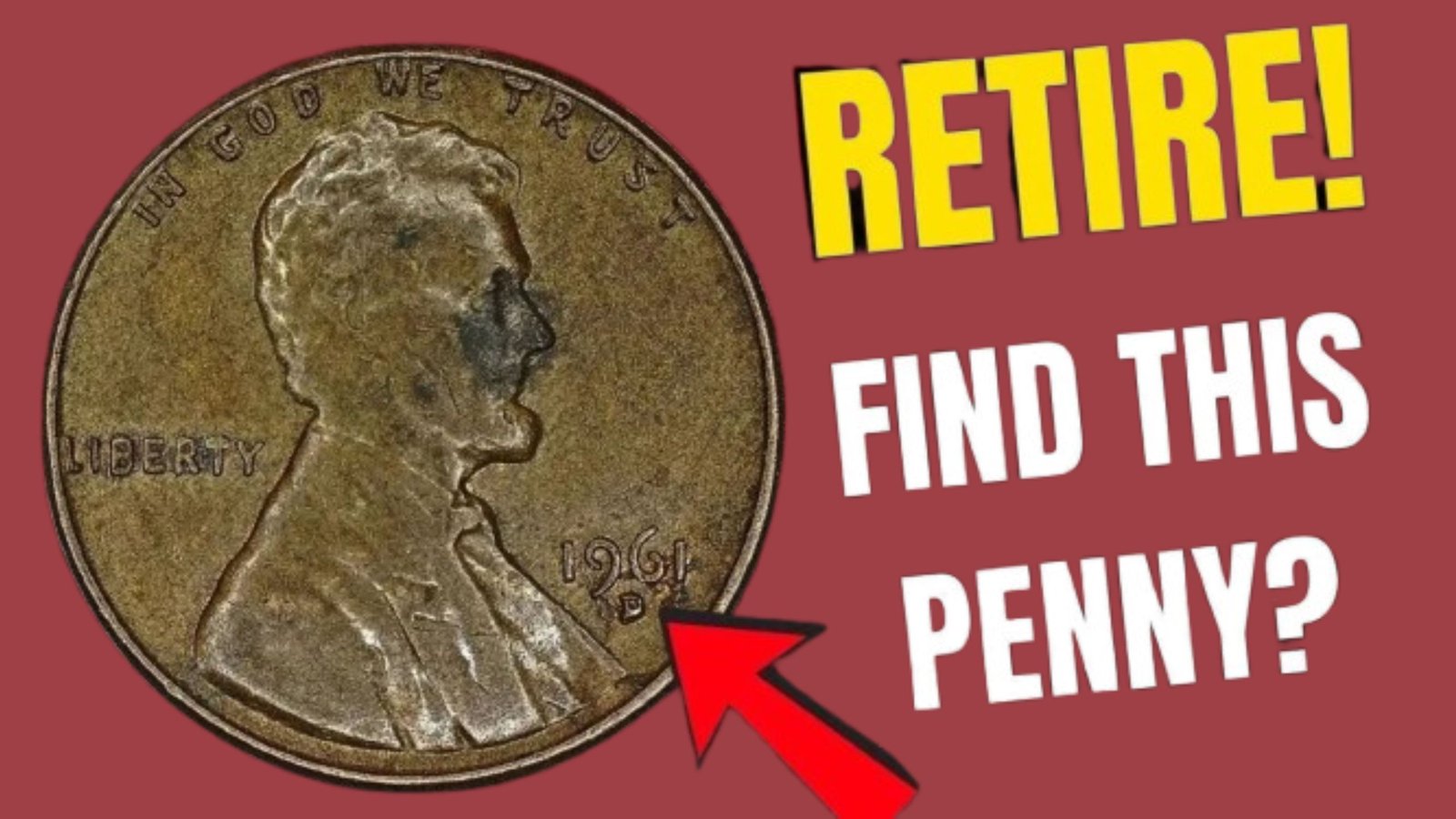
It might sound unbelievable, but one Lincoln Wheat Penny has been valued at a jaw-dropping $21 million. What makes the story even more fascinating is that experts believe this extraordinary coin may still be in circulation today. That means it could be sitting unnoticed in a change jar, tucked away in an old drawer, or even resting in your pocket right now.
The Rare Bicentennial Quarter Worth $11 Million Still In Circulation
A Brief History of the Lincoln Wheat Penny
The Lincoln Wheat Penny was first minted in 1909, created to celebrate the 100th anniversary of Abraham Lincoln’s birth. The coin features Lincoln’s portrait on the obverse (front) and two wheat stalks on the reverse (back), which is how it earned its nickname. These pennies were minted until 1958, when the wheat design was replaced by the Lincoln Memorial.
Over the decades, billions of these pennies were made, but only a few rare varieties carry enormous value.

What Makes One Penny Worth $21 Million?
The penny that reached the $21 million mark isn’t just any Wheat Penny. It likely owes its value to one of the following rare features:
- Minting error: A coin struck with mistakes, such as a double-die or wrong planchet.
- Extremely low mintage: Some years and mint marks had very few coins made.
- Unique preservation: A coin in nearly perfect, uncirculated condition becomes far rarer.
One of the most famous examples is the 1943 copper Wheat Penny, produced when most coins were struck in steel due to World War II. Only a handful are known to exist, making them some of the most valuable pennies ever discovered.
Could It Still Be in Circulation?
The idea that a $21 million penny could still be circulating adds an exciting twist to the story. While most rare coins are locked away in collections or museums, there’s always the chance that one slipped through the cracks, ending up in everyday use. Stories of rare pennies turning up in garage sales, piggy banks, or even change from a store are not uncommon.
That possibility is what fuels treasure-hunters and coin enthusiasts to carefully check their pocket change.
Why Collectors Are Obsessed with the Wheat Penny
For collectors, the Lincoln Wheat Penny is a symbol of American history. It represents not just everyday money, but also the struggles and triumphs of the early 20th century. Owning a rare version is like holding a piece of history—and the thrill of finding one worth millions only adds to its mystique.

How to Spot a Valuable Wheat Penny
While most Wheat Pennies are worth just a few cents to a couple of dollars, here are a few signs yours could be more valuable:
- Look for 1943 copper pennies (most were steel).
- Check 1909-S VDB pennies—these are extremely rare.
- Inspect for mint errors like double-die obverse (design looks doubled).
- Condition matters: shiny, uncirculated pennies are always worth more.
Final Thoughts: Your Change Could Be a Fortune
The story of the Lincoln Wheat Penny valued at $21 million is a reminder that treasures don’t just live in museums or private collections. They could be hiding in plain sight—in a shoebox, a coin jar, or the palm of your hand.
FAQs About the $21 Million Lincoln Wheat Penny
Q1: What is a Lincoln Wheat Penny?
The Lincoln Wheat Penny was minted from 1909 to 1958. It features Abraham Lincoln on the front and two wheat stalks on the back, which is why it’s called a “Wheat Penny.”

Q2: Why is one Lincoln Wheat Penny worth $21 million?
The coin valued at $21 million is believed to be an extremely rare error coin or a special low-mintage version, such as the 1943 copper penny or the 1909-S VDB. Its rarity, condition, and historical significance make it worth millions to collectors.
Q3: How can I tell if my Wheat Penny is valuable?
Check for these features:
-
1943 Copper Penny (most were steel that year).
-
1909-S VDB Penny (very low mintage, highly sought after).
-
Mint errors, such as doubled designs or off-center strikes.

-
Uncirculated condition, meaning no wear and tear.
Q4: Could a rare Wheat Penny still be in circulation?
Yes, though it’s unlikely, some rare coins slip through everyday circulation. Many valuable pennies have been found in pocket change, old jars, or inherited collections.
Q5: Where can I get my Wheat Penny checked?
You can take your coin to a professional coin dealer, or send it to grading services like PCGS (Professional Coin Grading Service) or NGC (Numismatic Guaranty Company) for authentication.